|
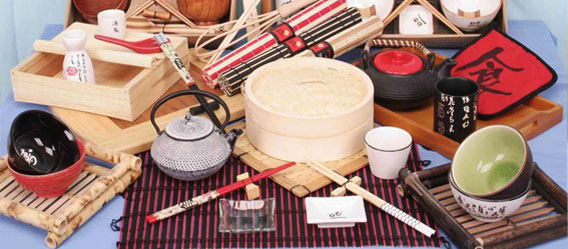
So you want to cook delicious, authentic Asian dishes, but don’t know where to start? A good place to begin is in the kitchen, with the right tools. Asian cuisine doesn’t require much specialized cookware, but there are a few trademark tools which every cook will prize when creating Asian-style meals. In this month’s newsletter, Mrs. Lin’s Kitchen will walk you through the basics of Asian kitchenware, including such signature Asian cookware as the wok, bamboo steamers, rice cookers, and Asian-style cleavers. With these essential tools and a basic knowledge of their uses, any cook will be able to create a mouth-watering variety of scrumptious Asian dishes.
Wok/Stir-Fry Pan
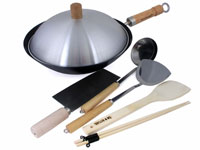 Almost all chefs of Asian cuisine would agree that the single most important piece of kitchenware is the wok, or the Asian stir-fry pan. The wok’s bowl-shaped pan is perfect for making the signature stir-fries that accompany every Asian-style meal. While some cooks may initially attempt substituting a Western frying pan, the advantages of the wok’s unique shape and design justify this purchase: the wok distributes heat evenly throughout its contents, uses less oil when deep-frying, and guarantees that food tossed for stir-frying will land back in the pan (and not on the stove). With a good wok, cooking Chinese food becomes much easier process, producing better-tasting, authentic Chinese dishes. When shopping for a wok, keep in mind these considerations:
Type of metal: Today, you can find woks for sale made from various different metals like aluminum, copper, and stainless steel. By far the most popular type of wok, however, remains the traditional carbon steel wok. Compared to some of the other metals, a carbon steel wok is usually more affordable. Moreover, the carbon steel metal conducts heat very evenly, ensuring that the food in your wok receives an even distribution of heat while cooking.
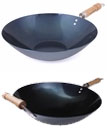 Flat versus round bottoms: Woks have traditionally been made with rounded bottoms, but these are potentially damaging to Western-style electric stove ranges. With electric ranges, the rounded bottoms tend to reflect heat back onto the range, potentially damaging it. As a potential solution, wok collars—or circular devices punches with holes to transfer heat, which are placed under the wok—have been sold with round-bottomed woks since the 1960s. The collar ensures that the wok is evenly balanced over the heat source. While the collar is not necessary when cooking with a gas stove, it should always be used with electric stove ranges to prevent damage. If you own an electric range, then, consider investing in a flat-bottomed wok instead of the traditional round bottom. The flat bottom does not reflect heat, and is therefore safe to use without the hassle of applying the collar. The flat-bottomed wok may also be used with gas ranges. Flat versus round bottoms: Woks have traditionally been made with rounded bottoms, but these are potentially damaging to Western-style electric stove ranges. With electric ranges, the rounded bottoms tend to reflect heat back onto the range, potentially damaging it. As a potential solution, wok collars—or circular devices punches with holes to transfer heat, which are placed under the wok—have been sold with round-bottomed woks since the 1960s. The collar ensures that the wok is evenly balanced over the heat source. While the collar is not necessary when cooking with a gas stove, it should always be used with electric stove ranges to prevent damage. If you own an electric range, then, consider investing in a flat-bottomed wok instead of the traditional round bottom. The flat bottom does not reflect heat, and is therefore safe to use without the hassle of applying the collar. The flat-bottomed wok may also be used with gas ranges.
One or two handles: Woks have historically been designed with two metal handles on opposite sides, making the wok easier to lift on and off the traditional Chinese wood stove. Modern woks, however, are increasingly manufactured with a long wooden handle, like a skillet. This long handle gives the cook more mobility, to easily move and tilt the wok while stir-frying. The wooden handle also eliminates the need to use a potholder or mitt when gripping traditional, metal handles. Many long-handled woks come with a smaller metal handle on the opposite side, so the wok may still be easily lifted.
Size: Woks may be found in a wide variety of sizes, according to the cooks’ individual needs. Consider the length and the depth of the wok, then compare these to the typical portions you will be cooking. While smaller woks may be easier to handle, they can only cook limited amounts of food, which may not be practical for a family. While restaurants may use woks that are several feet across, a 14 inch wok has proven most popular for use at home. Whatever size you choose, make sure you can easily lift and handle the wok, and that it fits comfortably on your stove.
Non-stick coating: While carbon steel woks are generally the most effective, non-stick coating tends not to work well with this metal. Woks with non-stick coating are primarily marketed towards cooks interested in low-fat cooking, because the non-stick surface reduces the amount of oil needed. If you choose to purchase a wok with non-stick coating, keep in mind that frying at high heat may damage the coating. If you want a wok with non-stick coating, consider a heavy gauge aluminum wok instead of the traditional carbon steel: the coating’s lifetime usually lasts longer and proves more effective.
Once you have selected and purchased your wok, make sure you “season” it before cooking. Seasoning removes the preservative that manufacturers coat over the wok to prevent rust, and replace it with a light coating of cooking oil. The proper method for seasoning your wok will depend on the manufacturing process and type of wok, so pay proper attention the manufacturer’s instructions. To ensure the full lifetime and maximum use of your wok, be sure to clean it after every use.
Chinese Cleaver
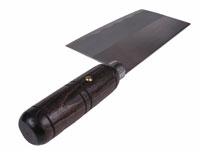 The wide, sharp blade on the Chinese cleaver makes it an ideal all-purpose cutting tool, helpful with both meats and vegetables. In appearance, the cleaver looks similar to the Western-style butcher’s knife: its simple design consists of a thick rectangular blade attached to a wooden handle. In Asian-style cooking, every part of this simple design becomes useful. The sharp edge cuts and slices meats and vegetables; the top, blunt edge pounds and tenderizes meat, and the long, flat sides smash ginger and garlic. Because a cleaver functions in so many roles, it’s important to ensure that you buy a high-quality one that’s comfortable for you to handle. Although the basic design and structure of the cleaver hasn’t changed through the years, there remains a wide variety of choices in size and metal. When shopping for your Chinese cleaver, keep in mind these following considerations: The wide, sharp blade on the Chinese cleaver makes it an ideal all-purpose cutting tool, helpful with both meats and vegetables. In appearance, the cleaver looks similar to the Western-style butcher’s knife: its simple design consists of a thick rectangular blade attached to a wooden handle. In Asian-style cooking, every part of this simple design becomes useful. The sharp edge cuts and slices meats and vegetables; the top, blunt edge pounds and tenderizes meat, and the long, flat sides smash ginger and garlic. Because a cleaver functions in so many roles, it’s important to ensure that you buy a high-quality one that’s comfortable for you to handle. Although the basic design and structure of the cleaver hasn’t changed through the years, there remains a wide variety of choices in size and metal. When shopping for your Chinese cleaver, keep in mind these following considerations:
Type of metal: The metal portion of the cleaver is its blade. Because the blade is used for everything from cutting to tenderizing and smashing, the quality of the blade’s metal will significantly affect the cleaver’s performance and lifetime. Cleaver blades have traditionally been crafted from carbon steel, but this metal is highly susceptible to rust, which may add an undesirable metallic taste to your food. As a result, blades made from stainless steel are currently gaining popularity. Stainless steel blades tend to stay sharp longer; the hard metal, however, is more difficult to sharpen. A good compromise between carbon and stainless steel is a combination blade, which combines the two metals.
Size: Cleavers come in a variety of shapes, depending upon the cleaver’s purpose and the cook’s individual preference. The rectangular blade usually varies from about three to five inches in width, and six to ten inches in length. Keep in mind that smaller cleavers may not be designed to chop through bones, even if they resemble a Western-style butcher’s knife in appearance. Lighter cleavers are primarily intended for slicing meats and vegetables, and using these to chop bones may damage the blade. Heavier blades, usually weighing two pounds or more, are specifically designed to chop easily through bones. Be sure to check with the manufacturer or store to see whether your cleaver can safely chop bones. Finally, before you purchase the cleaver, try how it feels in your hand. While the cleaver should feel solid, so that you can forcefully cut through your food, the cleaver should not be uncomfortably heavy. If your arms feel strained by the cleaver, consider opting for a lighter, smaller model.
Electric Rice Cooker
For anyone who regularly eats rice at home, an electric rice cooker is an invaluable tool. Most modern rice cookers are exceptionally easy to operate: many have timers that will automatically shut off the equipment once your rice is finished cooking; with this option, you can go out and run errands while cooking your rice, or you can focus your attention on creating delicious side dishes. Many rice cookers also have an option to keep your rice warm after it has finished cooking. This feature is ideal for anyone with a busy schedule. You can throw the rice into the cooker in the morning, and eat warm, fresh rice in the evening! The versatility of these rice cookers allows you to consistently make delicious and nutritious rice without spending much time or effort.
When purchasing a rice-cooker, the most important consideration is its size. Check both the maximum and the minimum amount of rice it can cook. You want it to produce enough rice for a complete meal, but you don’t want the minimum amount to be larger than you can finish. As an added bonus, look for features like the flavor-scenter, which lets you add ginger, spices, and other seasoning. A good rice cooker with basic options like automatic shut-off can usually be found for less than forty dollars.
Bamboo Steamer
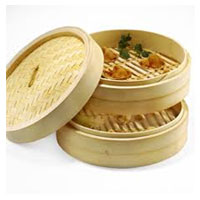 The texture of bamboo is perfectly adapted for steaming foods without accumulating excess moisture. The bamboo sides and woven bamboo top let the steam circulate through the steamer and evaporate through the lid.
Using a bamboo steamer to cook is very simple: just boil water, then stack the steamers on top. Many Asians like to boil water in a round wok, then center the bamboo steamers over the water. When stacking steamers, place the food that requires the most steaming at the bottom, because the bottom will receive the hottest steam.
When steaming foods, arrange the food in flat, heat-proof dishes or foil pie pans before placing it in the steamer. Or, try lining the bottom of the steamer with lettuce or bok choy leaves, and steaming the food directly on the leaves. Try serving the food directly in the bamboo steamers: the steamers’ natural bamboo construction lends an attractive and authentic Asian look to your table. When serving steamed foods, be sure to lift the lid and let the steam disperse beforehand. The steam may be very hot, so be cautious with children.
In recent years, manufacturers have also begun producing metal steamers. Metal steamers are usually sold with a saucepan for heating water. While the metal version may be slightly easier to clean, it tends to accumulate more moisture than the traditional bamboo version. The excess moisture runs the risk of letting your food go soft and soggy while steaming.
Oroshi-gane (Japanese Grater)
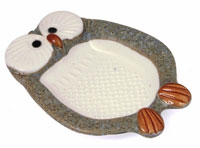 Asian chefs prize this grater for its extremely fine teeth—much finer than any of its Western counterparts. With this grater, you can make fine, thin slivers of ginger and wasabi which are perfect for cooking and flavoring various dishes and soups. By grating such fine pieces, the Japanese grater releases more flavor; the thin slices of ginger can also be arranged on top of a finished dish as an appetizing, and attractive, decorative touch. Most Japanese graters are made from metal or glazed ceramic. Asian chefs prize this grater for its extremely fine teeth—much finer than any of its Western counterparts. With this grater, you can make fine, thin slivers of ginger and wasabi which are perfect for cooking and flavoring various dishes and soups. By grating such fine pieces, the Japanese grater releases more flavor; the thin slices of ginger can also be arranged on top of a finished dish as an appetizing, and attractive, decorative touch. Most Japanese graters are made from metal or glazed ceramic.
Sudare (Bamboo Mat)
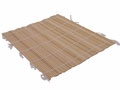 Simple, square mats of bamboo sticks bound with string, the sudare’s simple design belies its usefulness. Bamboo mats have traditionally been used in Japanese cuisine for rolling tightly-packed sushi and Japanese omelettes. They also serve as attractive placemats when serving Asian-style meals. Simple, square mats of bamboo sticks bound with string, the sudare’s simple design belies its usefulness. Bamboo mats have traditionally been used in Japanese cuisine for rolling tightly-packed sushi and Japanese omelettes. They also serve as attractive placemats when serving Asian-style meals.
Suribachi + Surikogi (Japanese Mortar + Pestle)
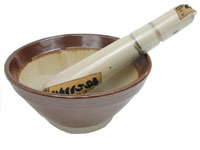 The Asian-style mortar and pestle differs from its Western counterpart in both its design and results. The suribachi, or the mortar, also means “grater” in Japanese, indicating its unique interior design. The suribachi’s insides are closely scored and textured with rough edges, which creates an effective grating action when the foods are pressed against it. Unlike ceramic or stone pestles used in the West, the Asian pestle is made from a long piece of hard wood, molded into the perfect shape for grinding seeds and spices. With the unique interior design, the Asian-style mortar and pestle works extremely fast and effectively. Use this mortar and pestle to grind everything from nuts and seeds to spices and roots. Try using your mortar and pestle to create Asian curry from authentic spices. The freshly-ground spices release aromatic oils which cannot be found in the dried, pre-ground versions. These oils contain the spices’ essential flavor, and will infuse your dish with an extra burst of taste. The Asian-style mortar and pestle differs from its Western counterpart in both its design and results. The suribachi, or the mortar, also means “grater” in Japanese, indicating its unique interior design. The suribachi’s insides are closely scored and textured with rough edges, which creates an effective grating action when the foods are pressed against it. Unlike ceramic or stone pestles used in the West, the Asian pestle is made from a long piece of hard wood, molded into the perfect shape for grinding seeds and spices. With the unique interior design, the Asian-style mortar and pestle works extremely fast and effectively. Use this mortar and pestle to grind everything from nuts and seeds to spices and roots. Try using your mortar and pestle to create Asian curry from authentic spices. The freshly-ground spices release aromatic oils which cannot be found in the dried, pre-ground versions. These oils contain the spices’ essential flavor, and will infuse your dish with an extra burst of taste.
Clay Pot
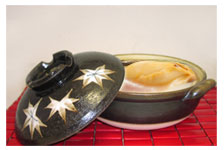 The clay pot is the Asian counterpart to the Western casserole dish. Unlike the casserole, however, the clay pot is not cooked in the oven, but rather on the stovetop. As the name suggests, this is a pot made from thickly matted clay, which traps heat inside and cooks your food with a slow simmer. Because the clay pot’s design retains heat so effectively, it can keep your food heated for hours after cooking. The clay pot is the Asian counterpart to the Western casserole dish. Unlike the casserole, however, the clay pot is not cooked in the oven, but rather on the stovetop. As the name suggests, this is a pot made from thickly matted clay, which traps heat inside and cooks your food with a slow simmer. Because the clay pot’s design retains heat so effectively, it can keep your food heated for hours after cooking.
To use the clay pot, first brown ingredients in the wok, then transfer them to the pot for simmering. Be sure to never cook food in the clay pot without liquid inside; without liquid, the food will not cook properly, and you risk damage to the pot’s interior. Dishes made with the clay pot should be thick in liquids, simmering the contents in delicious sauces and spices. Try serving the food in the pot, fresh off the stove. The thick, ceramicware retains a simple but aesthetic appeal, which will complement your any table. The clay pot can also be used to cook delicious stews and soups, as well as side dishes of hearty meats and vegetables.
While much Western-styled kitchenware can be applied to create delicious and authentic Asian-style cuisine, some basic tools remain necessary. With the tools explored today, you’re well on your way to preparing complete meals! Mrs. Lin’s Kitchen encourages you to inform yourself before you invest in Asian-style kitchenware. We carry a selection of high-quality products which have been tested and proven popular with cooks throughout Asia. Please refer to a cookbook of Asian-style cuisine to find delicious recipes that use the tools discussed today.
Once you are finished supplying your kitchen, don’t forget to stock up on the proper tableware to match your dishes! Chopsticks and sauce platters will add an attractive, authentic Asian look to your table, to match your delicious Asian-style meal!
Enjoy! |
|
 |
OUR 2004 NEWSLETTERS
Holiday Shopping Guide for Men
Holiday Shopping Guide for Women
Flowers in the Sky – Cherry and Plum Blossoms in Asian Culture
Travel to Asia: Southeast Asia II
Travel to Asia: Southeast Asia I
Travel to Asia: Korea
Travel to Asia: Taiwan
Travel to Asia: Japan
Travel to Asia: China, Part II
Travel to Asia: China
1,000 Cranes in Asian Culture and Art
Chinese New Year
Cookware for Your Asian-Style Kitchen
NEWSLETTER ARCHIVES
2011
2010
2009
2008
2007
2006
2005
2004
2003
2002
2001
MAY WE SUGGEST:
8 Inch Bamboo Steamer (6000)
Functional Steel Chopping Knife (6207)
Bamboo Spatula (6177)
4 Piece 14 Inch Double Handle Round Bottom Wok Set (6208)
Cooking Chopsticks 2 Pair (6120)
|


 Almost all chefs of Asian cuisine would agree that the single most important piece of kitchenware is the wok, or the Asian stir-fry pan. The wok’s bowl-shaped pan is perfect for making the signature stir-fries that accompany every Asian-style meal. While some cooks may initially attempt substituting a Western frying pan, the advantages of the wok’s unique shape and design justify this purchase: the wok distributes heat evenly throughout its contents, uses less oil when deep-frying, and guarantees that food tossed for stir-frying will land back in the pan (and not on the stove). With a good wok, cooking Chinese food becomes much easier process, producing better-tasting, authentic Chinese dishes. When shopping for a wok, keep in mind these considerations:
  Flat versus round bottoms: Woks have traditionally been made with rounded bottoms, but these are potentially damaging to Western-style electric stove ranges. With electric ranges, the rounded bottoms tend to reflect heat back onto the range, potentially damaging it. As a potential solution, wok collars—or circular devices punches with holes to transfer heat, which are placed under the wok—have been sold with round-bottomed woks since the 1960s. The collar ensures that the wok is evenly balanced over the heat source. While the collar is not necessary when cooking with a gas stove, it should always be used with electric stove ranges to prevent damage. If you own an electric range, then, consider investing in a flat-bottomed wok instead of the traditional round bottom. The flat bottom does not reflect heat, and is therefore safe to use without the hassle of applying the collar. The flat-bottomed wok may also be used with gas ranges.
 The texture of bamboo is perfectly adapted for steaming foods without accumulating excess moisture. The bamboo sides and woven bamboo top let the steam circulate through the steamer and evaporate through the lid.
 Simple, square mats of bamboo sticks bound with string, the sudare’s simple design belies its usefulness.
 The clay pot is the Asian counterpart to the Western casserole dish. Unlike the casserole, however, the clay pot is not cooked in the oven, but rather on the stovetop. As the name suggests, this is a pot made from thickly matted clay, which traps heat inside and cooks your food with a slow simmer. Because the clay pot’s design retains heat so effectively, it can keep your food heated for hours after cooking.